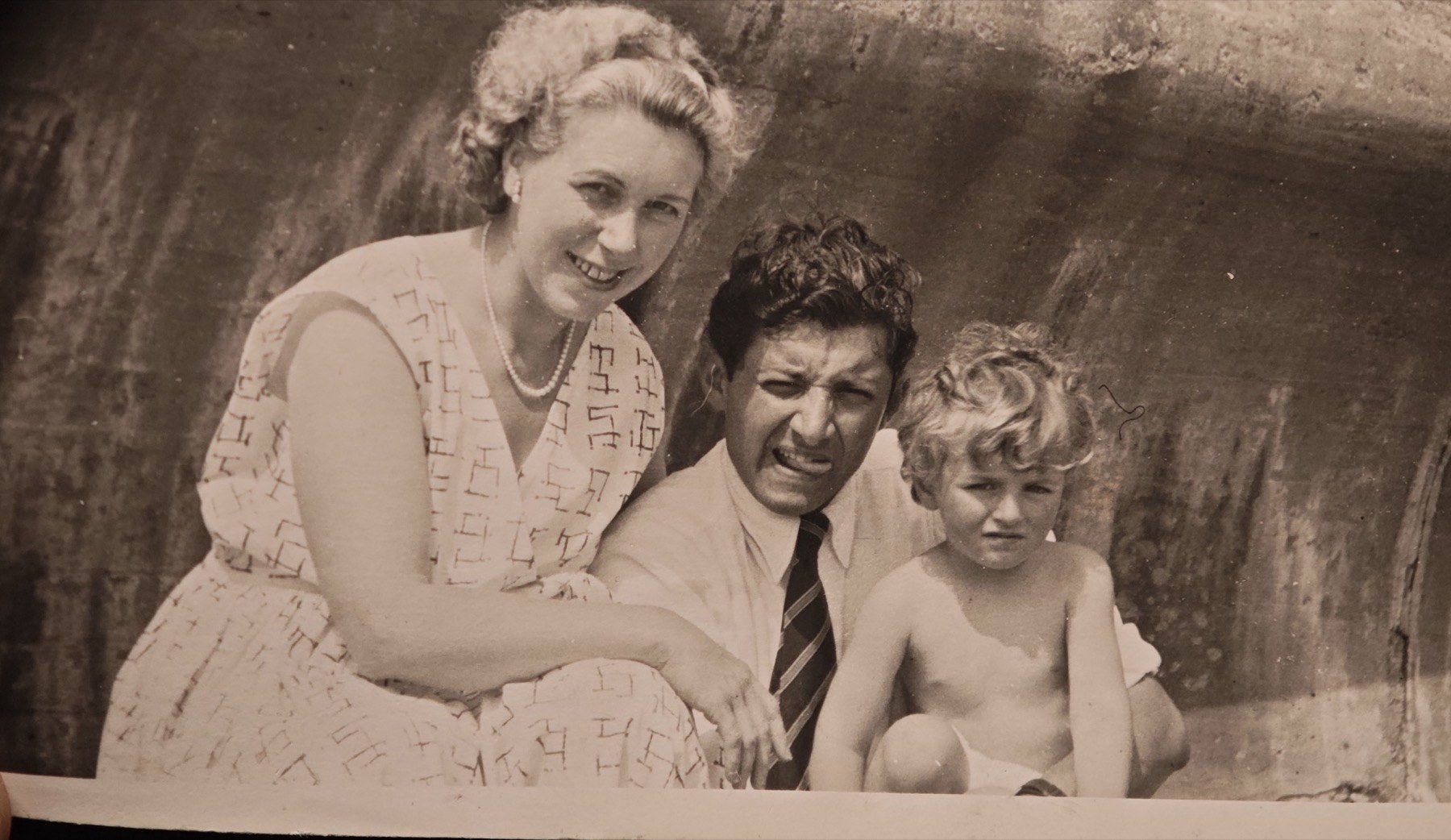
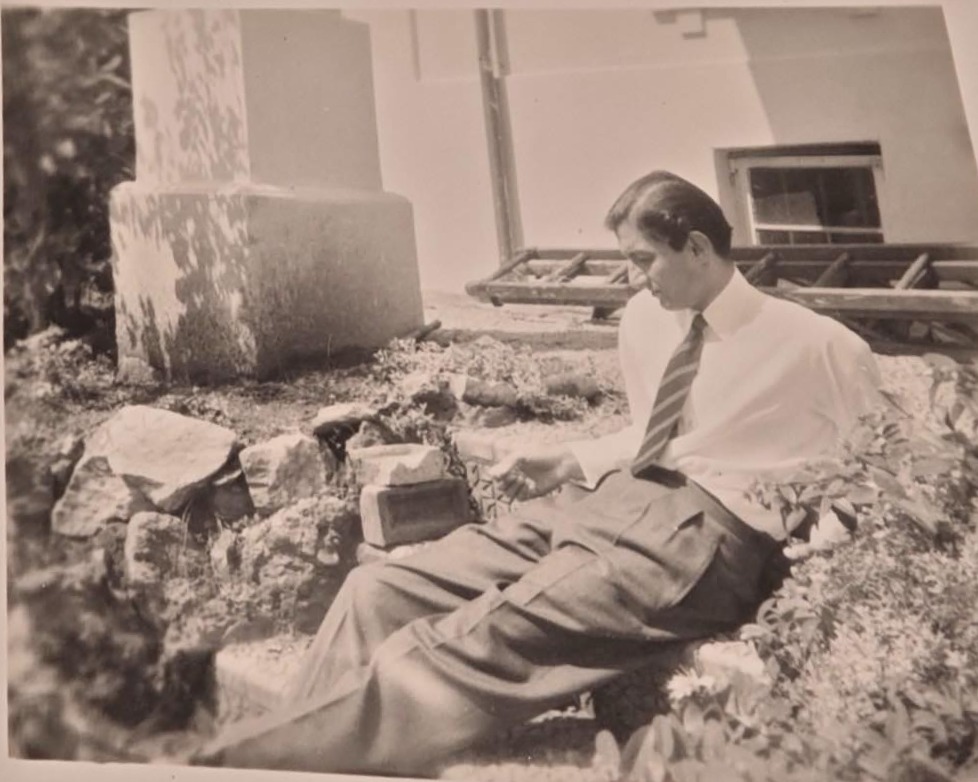
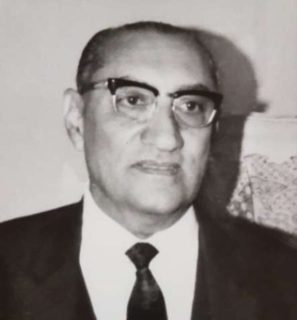
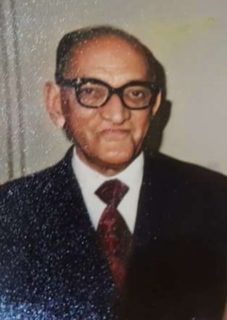
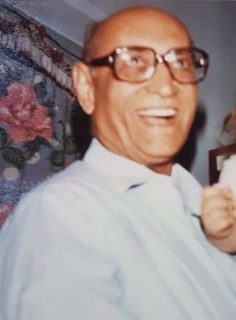
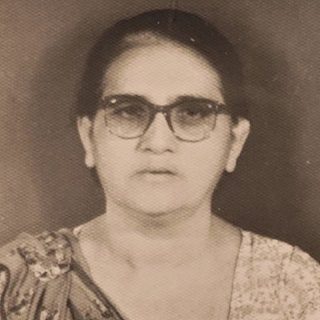
Dubash

Dubash means two languages. In Karachi a dubash was the man on the quayside who stood between a ship’s captain and the people on shore and translated one to the other, and as far as I can tell that’s what my family did at Keamari, the port, from the 1870s onwards. This is what I’ve managed to find out about them, and about my grandfather Sam, who left Karachi for England in 1955 and died abroad, most likely in India, in 1988.

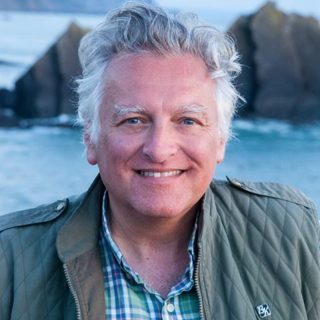
Put together by me, Ryan Stanikk, Sam’s grandson (my dad was his elder son, Neville), during 2026. Where something comes from a document I’ve said which one, where it’s family memory I’ve said whose, and where I’m guessing I’ve tried to be upfront about it. Some of this will be wrong, and if you know better I’d genuinely love to hear from you.

The family tree

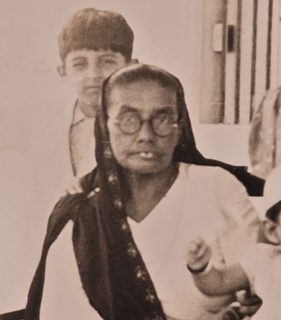
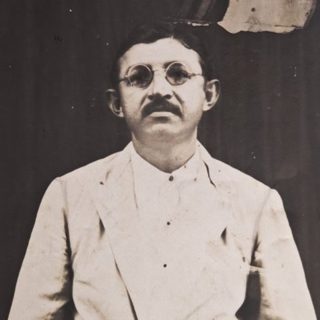
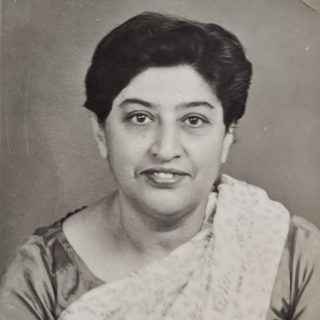
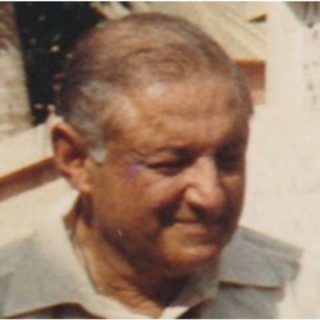
Sam at the bottom, then his parents and three of his four grandparents (I still don’t know who Ardeshir married). The tree has everyone I’ve found so far: 84 people across six generations, with photographs of 54 of them.

Open the family tree

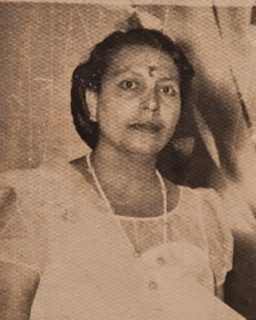
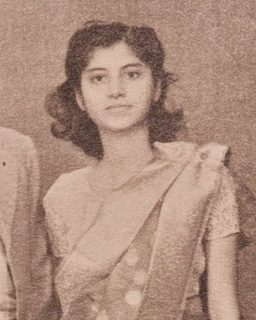
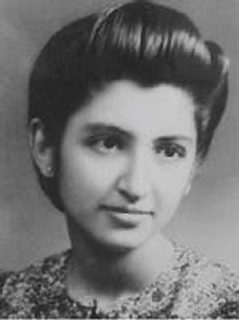
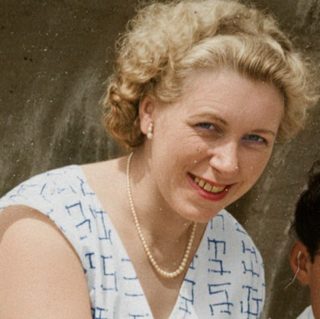
Or tap a face to go straight to that person.Or click a face to go straight to that person.

The docks

The Dubashes came to Karachi from Surat, or at least that’s Jamshed’s understanding, and it’s the same move a lot of Parsi families made in the 1800s. Karachi’s port was busy with British shipping, and much of the work of loading and unloading it was done by Parsi firms of stevedores and dubashes, who dealt with the ships on the owners’ behalf.

One of the first was Pestonji Bhicaji, who arrived in 1855 and trained his sons Phirojshah and Mehyarji to carry the business on. I don’t think we’re descended from him (I spent a while wondering, because the names are so similar), but our side of the story does start in his firm.

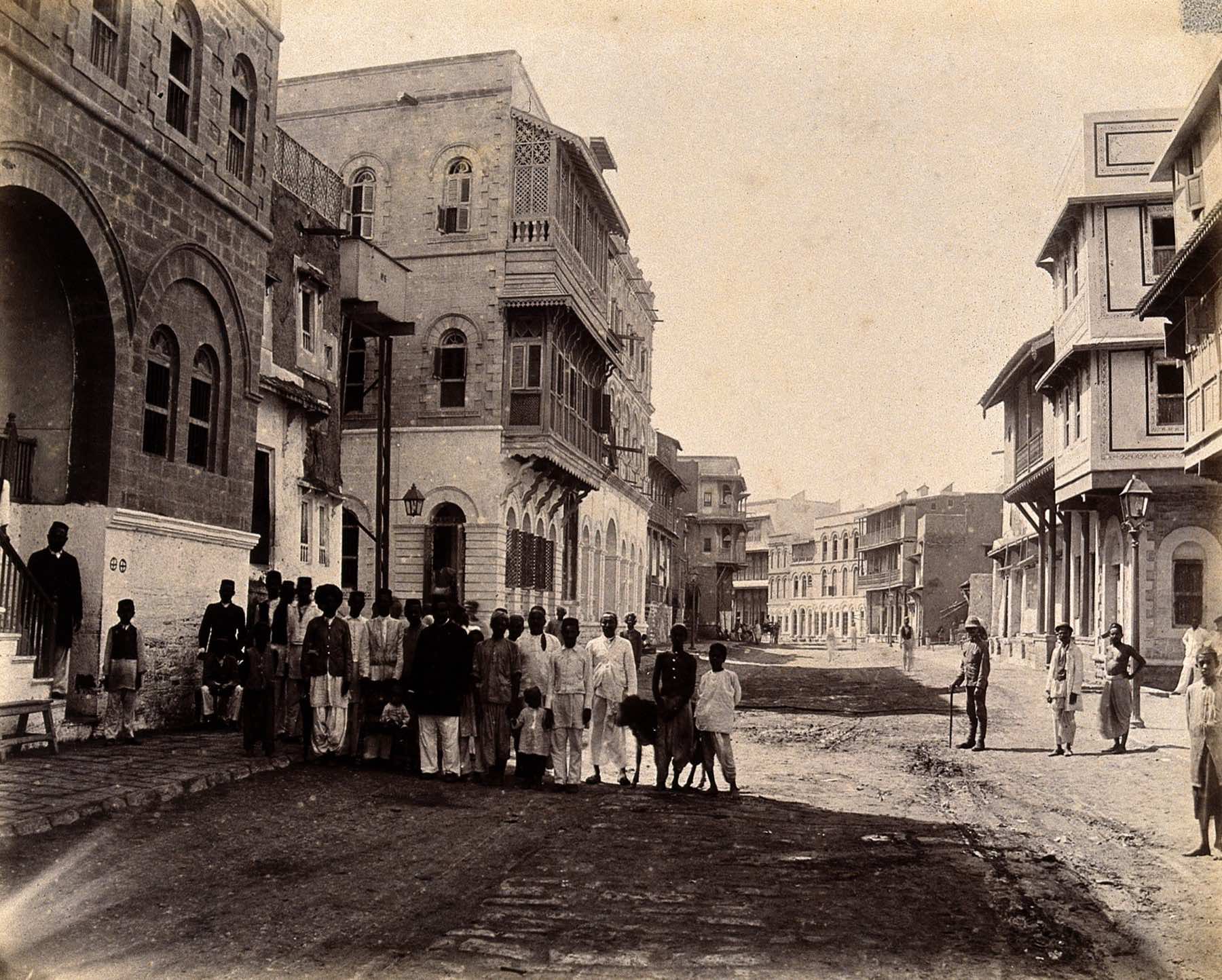
Rampart Row in Mithadar, Old Karachi, in 1897: tall stone buildings with wooden balconies, and a group of people standing in the street.
Rampart Row, Mithadar, Old Karachi, in 1897. This is roughly the Karachi Jivanji and the Bamboatwallas would have known.Wellcome Collection, public domain

The firm at Keamari

According to a history of Karachi’s Parsis compiled by Jehangir Punthakey, which Jamshed has a copy of, Jivanji P. Dubash started out as a clerk on the Sind-Punjab Railway and then joined Mehyarji’s sons as a partner, along with his own father and brother. After that he went into business with an Englishman, G. A. Brigstocke, and their firm, Brigstocke Jewanjee & Co, worked as stevedores and dubashes at Kiamari. A 1920 book on the businesses of the Bombay Presidency says they founded it in 1875. An advert from 1962 says 1878 and names a Captain E. A. Brigstocke instead, so I’m keeping both until something settles it. Punthakey says Jivanji ran it for 45 years and that his sons carried it on after him.

By 1920 both founders had died, because the book calls them “the late Mr. G. A. Brigstocke and the late Mr. Jewanjee Pestonji Dubash”, and that’s also how I found out what his P stood for. The partners by then were a G. A. Brigstocke (presumably the founder’s son), an A. F. Brigstocke, a Pestonji A. Dubash and a Hormusjee Jewanjee, and during the First World War the firm handled the loading and unloading of all the military transports at Karachi. It was still going in 1962, as Brigstocke Eduljee & Co.

Jivanji married Dinbai, the eldest daughter of Rustomji and Bachamai Bamboatwalla. I think Jivanji and Dinbai were Sam’s great-grandparents, but this is the one link in the whole line I haven’t been able to prove. Nothing I’ve found says in black and white that Ardeshir, Sam’s grandfather, was their son. What I do have is a post from 2015 by a Bamboatwalla descendant saying that an “Adil Gandi” (almost certainly Ader) descends from Dinbai and Jivanjee Dubash, and the simplest way for that to work is through Ardeshir.

The partner called Pestonji A. Dubash might settle it one day. If his A turns out to stand for Ardeshir, he’d have been Nariman’s brother and Jivanji’s grandson, and the book does say that “sons and grandsons of the founders” had become partners. I don’t know yet.

The studio

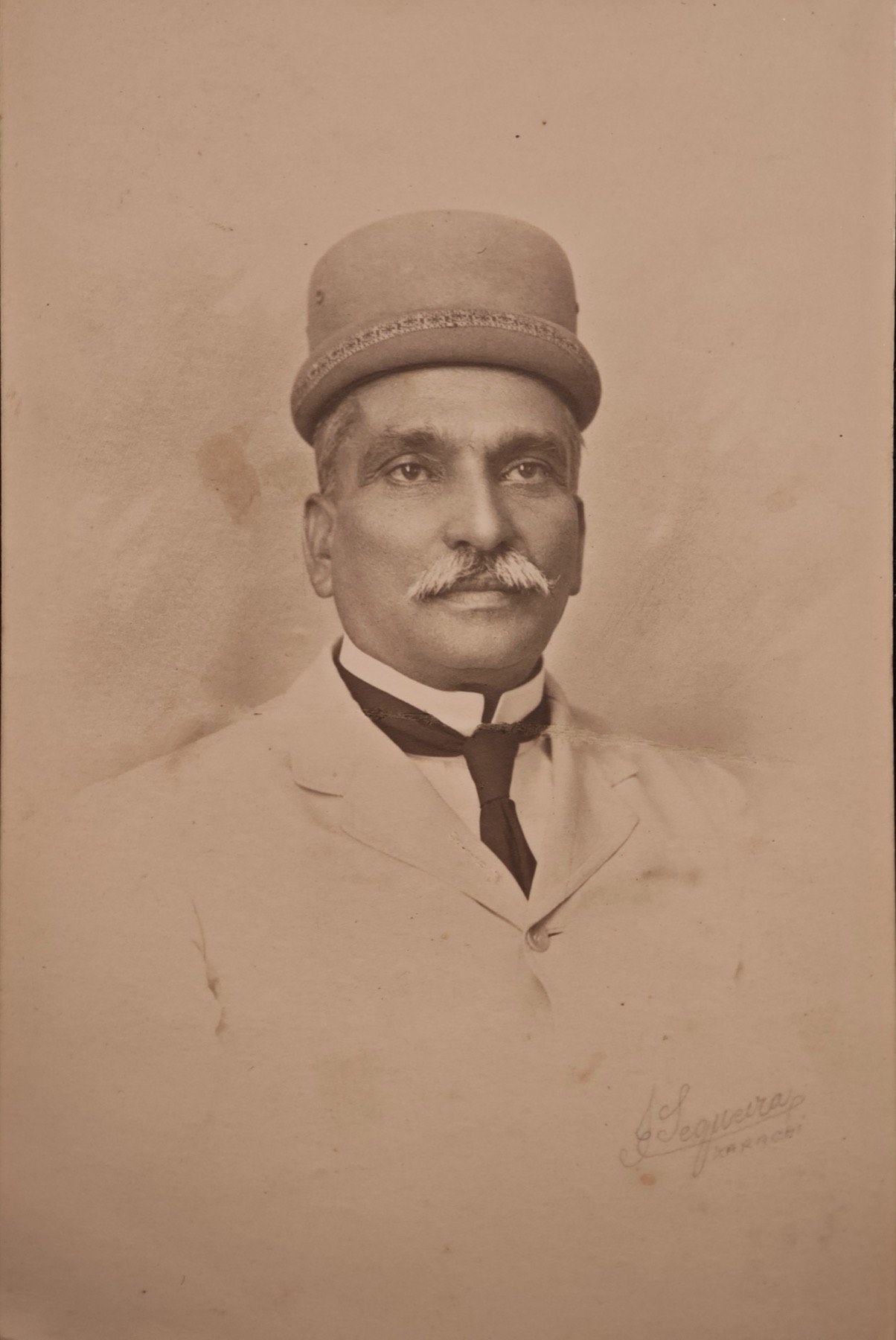
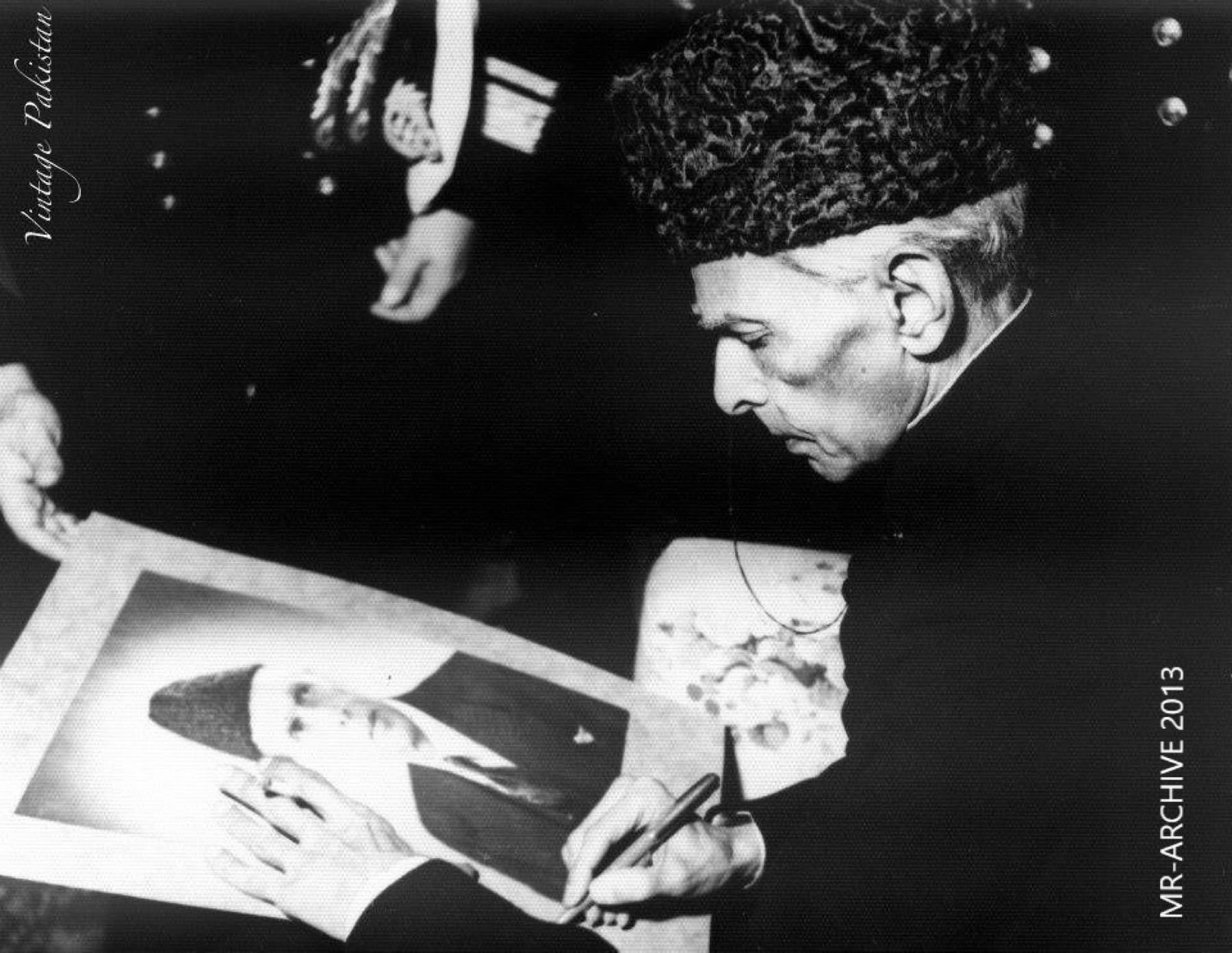
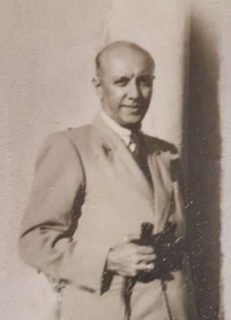
The two old portraits of Sam’s grandfather came from I. Sequeira and Sons, a Goan photography studio in Saddar founded in 1898 by Ignatius Sequeira. It was quite a studio (Arthur Sequeira took the official portrait of Muhammad Ali Jinnah). I’d hoped their archive might still exist, but Menin Rodrigues, who has researched the Sequeira family, told me in August 2026 that it was all lost in a move.

Sepia studio portrait of a man with a moustache, wearing a Parsi pagri, a pale jacket and a dark tie.
Captioned by the family “Great Grandfather Dubash” and taken at I. Sequeira and Sons. I think this is Ardeshir.Family collection
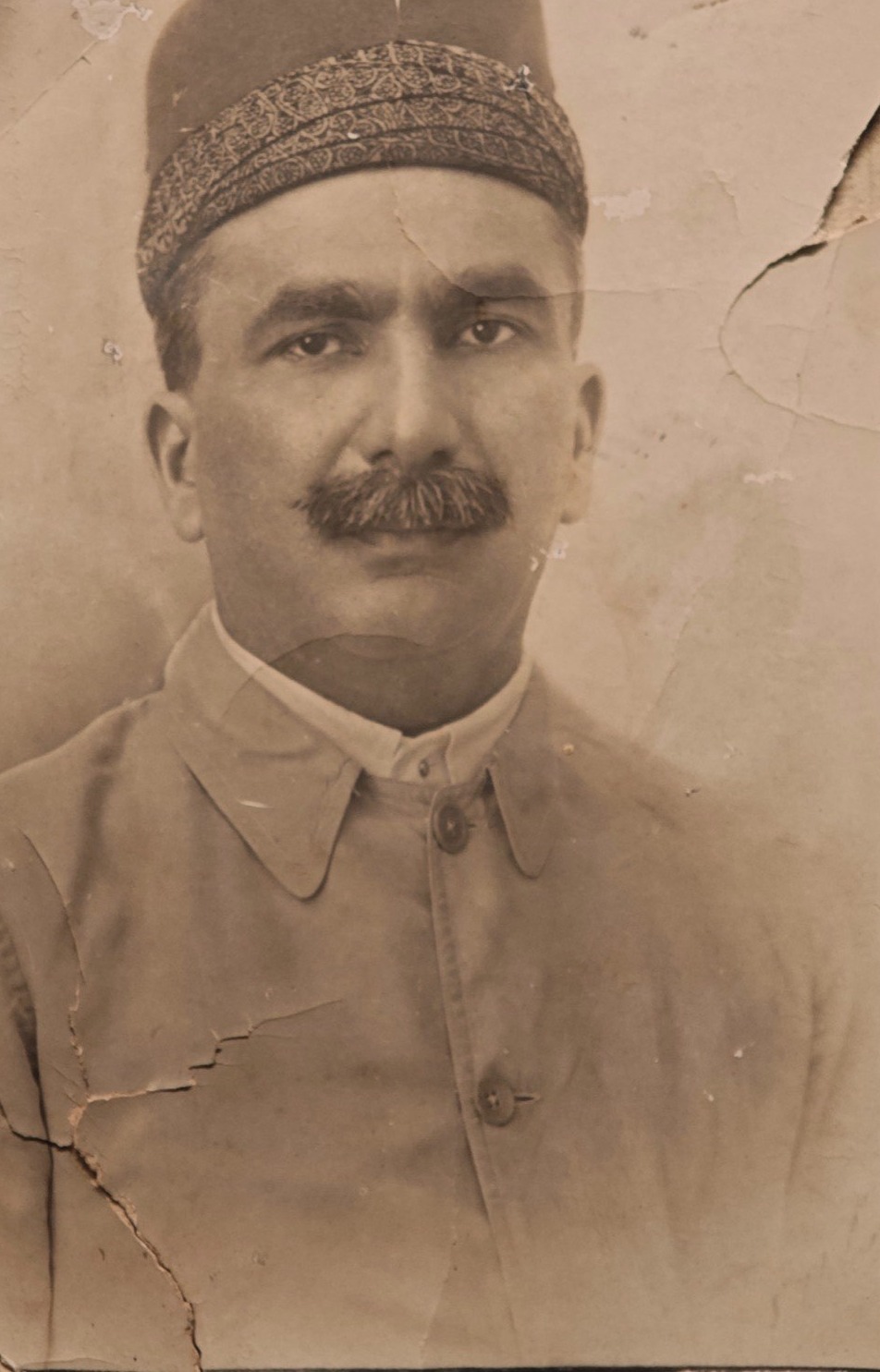
A second, more worn studio portrait of the same man when younger, in a pagri and a pale buttoned jacket.
The same man when younger, captioned “Sam’s grandfather” and mounted on a White Horse Whisky advertisement card. Again, probably Ardeshir.Family collection
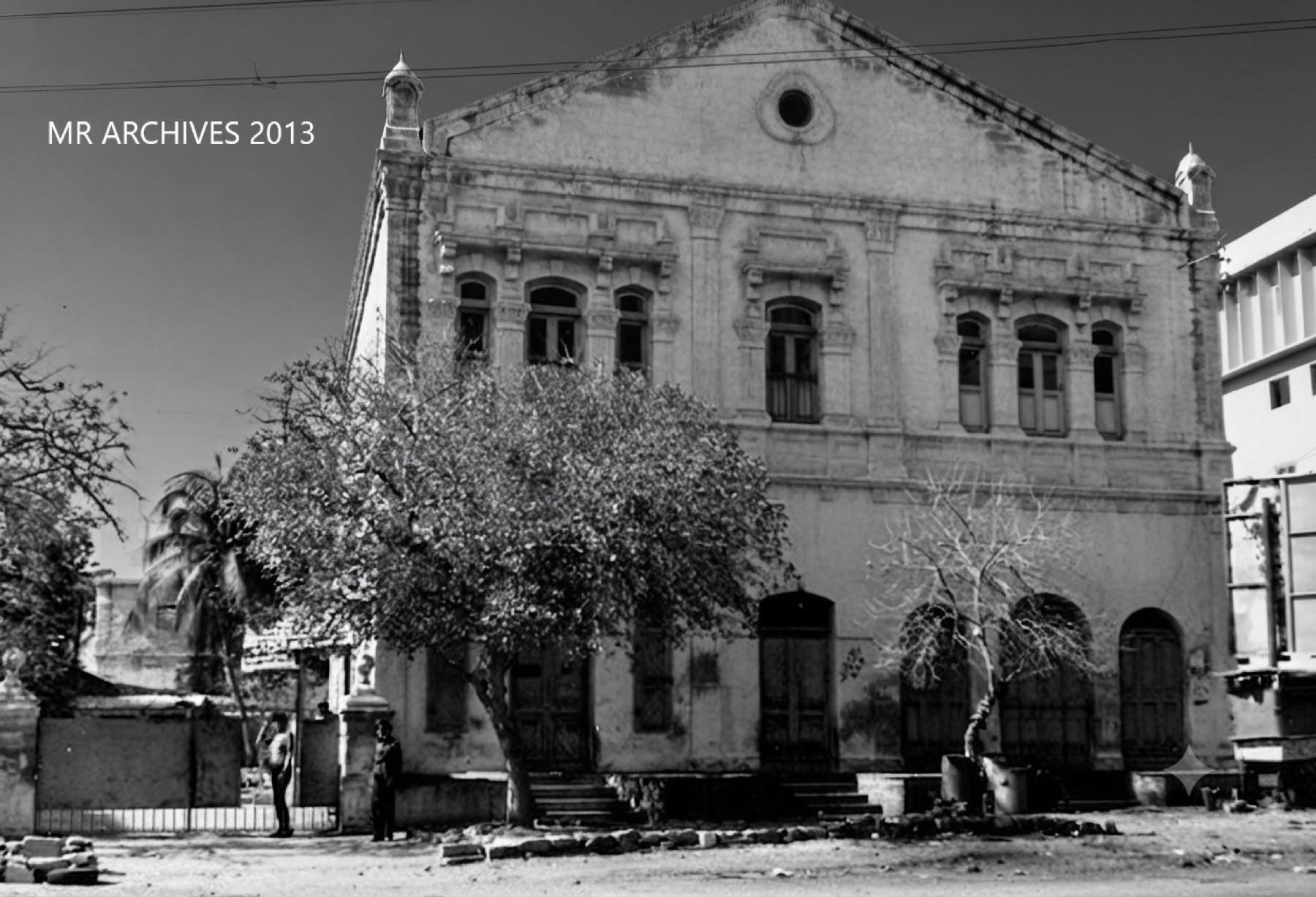
The Sequeira family house on Inverarity Road, Saddar: a large, ornate two-storey building with arched windows, behind trees.
The Sequeira family house on Inverarity Road, which was also the studio, so this is probably where the portraits were taken.Courtesy Menin Rodrigues and the Sequeira family, private archive, not public domain
Muhammad Ali Jinnah, in a karakul cap, signing a print of his official portrait.
Muhammad Ali Jinnah signing his official portrait by Arthur Sequeira.Courtesy Menin Rodrigues and the Sequeira family, private archive, not public domain

Ardeshir Dubash

I hadn’t heard of this man until August 2026. I’d always had Sam’s father down as plain Nariman, and I’d assumed Jivanji was his father. Then the 1932 Karachi residents directory turned up a Nariman Ardeshir Dubash on Napier Street in Saddar, and a family postcard signed “Nariman A. Dubash” said the same thing.

In Parsi naming your middle name is your father’s first name, so Nariman’s father was called Ardeshir, and that put a whole generation back into my tree. It wasn’t news to everyone, though. When I shared it, Jamshed said Ardeshir and Jivanji were both names he’d heard mentioned several times, and he came to the same conclusion himself from the naming rule. The residents list in his Punthakey book (the material is said to date from around 1919, though I haven’t been able to check that) has “Nariman A. Dubash: Napier Street” as well, and a few lines away there’s a Jamshedji R. Gahndi on the same street. Jamshed thinks that’s his Gandi grandfather, which would mean both his grandfathers lived on Napier Street years before Gulmoher married Behram.

The 1932 directory also lists a Jal Ardeshir Dubash on Napier Street. Same middle name, same street, so I think he was Nariman’s brother, but I can’t prove it yet. Ardeshir himself isn’t listed in 1932, so he’d probably died by then.

Karachi Residents Directory, 1932

p.68  NARIMAN ARDESHIR DUBASH, Napier Street, Sadar Qr.

p.64  JAL ARDESHIR DUBASH, Napier Street, Sadar Qr.

Punthakey, Karachi Zoroastrian Calendar, residents list

Nariman A. Dubash: Napier Street

Jamshedji R. Gahndi: Napier Street

Nariman and Villoo

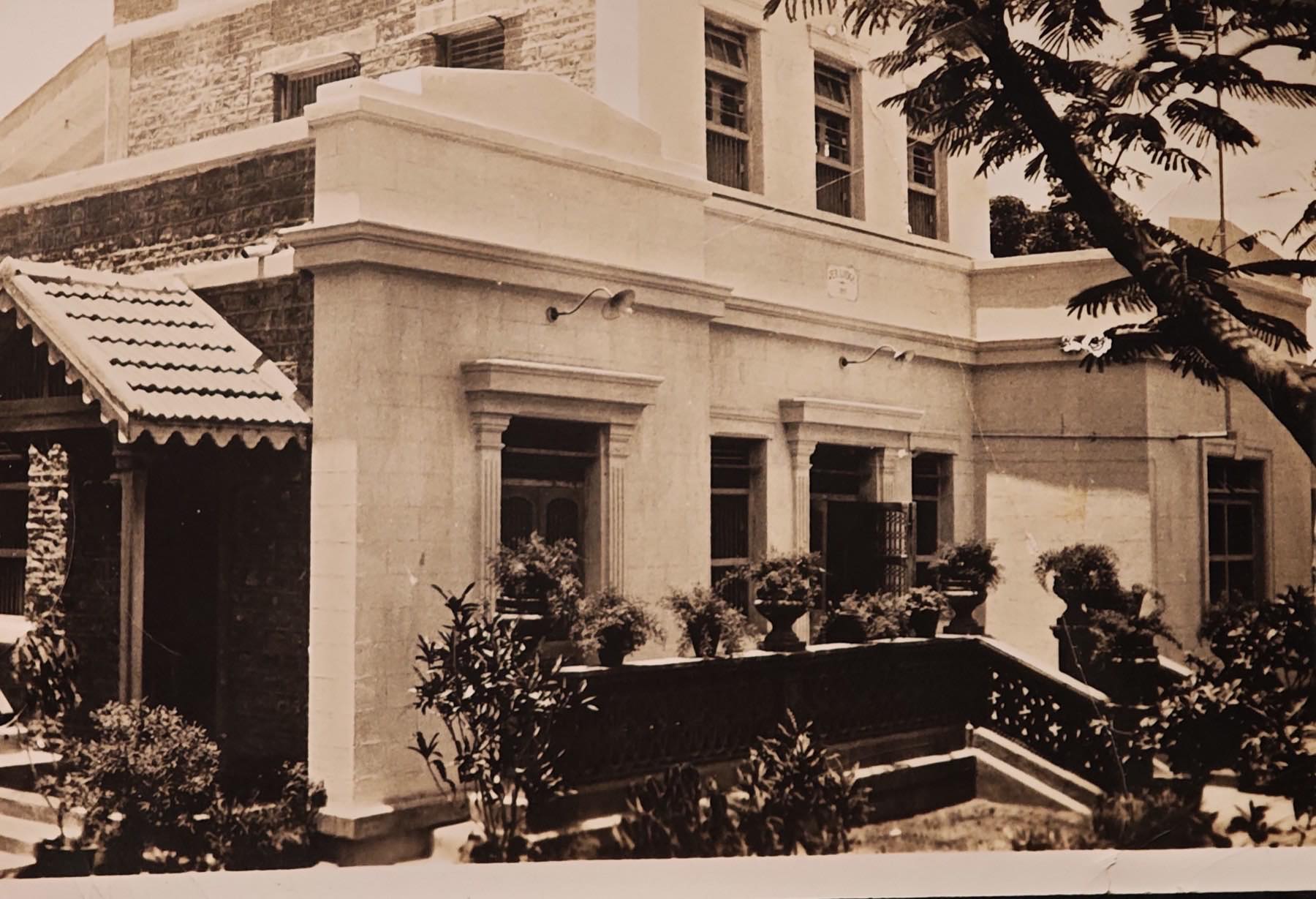
Nariman married Villoo Daroga, one of the six children of Mehrwanji and Jerbai Daroga (Jerbai was born an Atmaramsa, according to Shireen Shish’s family tree). In 1926 the Darogas built Jer Lodge at 29 Parsi Colony, Bunder Road Extension, and named it after Jerbai. It stayed the family’s address for decades, and it’s where Sam asked for the telegram to be sent when he died.

Nariman died in Karachi in the early 1970s. Mohsin and Ader both think it was before the Gandis moved to America in 1975. Villoo lived until about 1991 (Mohsin remembers her dying when he was four or five), so she outlived Sam by a few years.

Jer Lodge, a two-storey house at 29 Parsi Colony, Karachi, with a tiled porch and potted plants by the steps.
Jer Lodge, 29 Parsi Colony, built in 1926 and named after Jerbai. The family’s caption on the back just says “mother’s family home”.Family collection
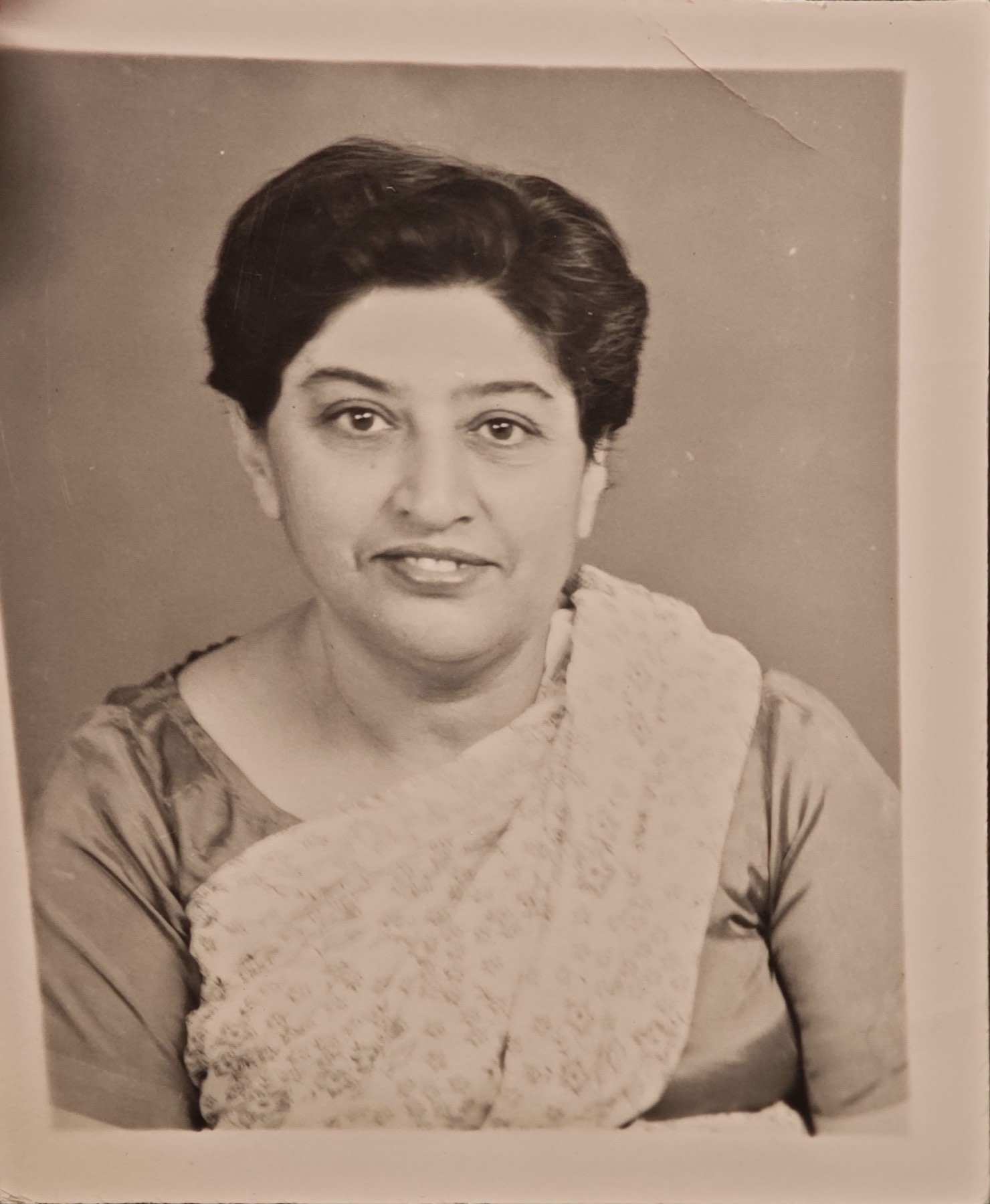
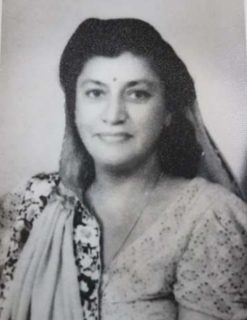
Portrait of Villoo Dubash in a sari, captioned 1957.
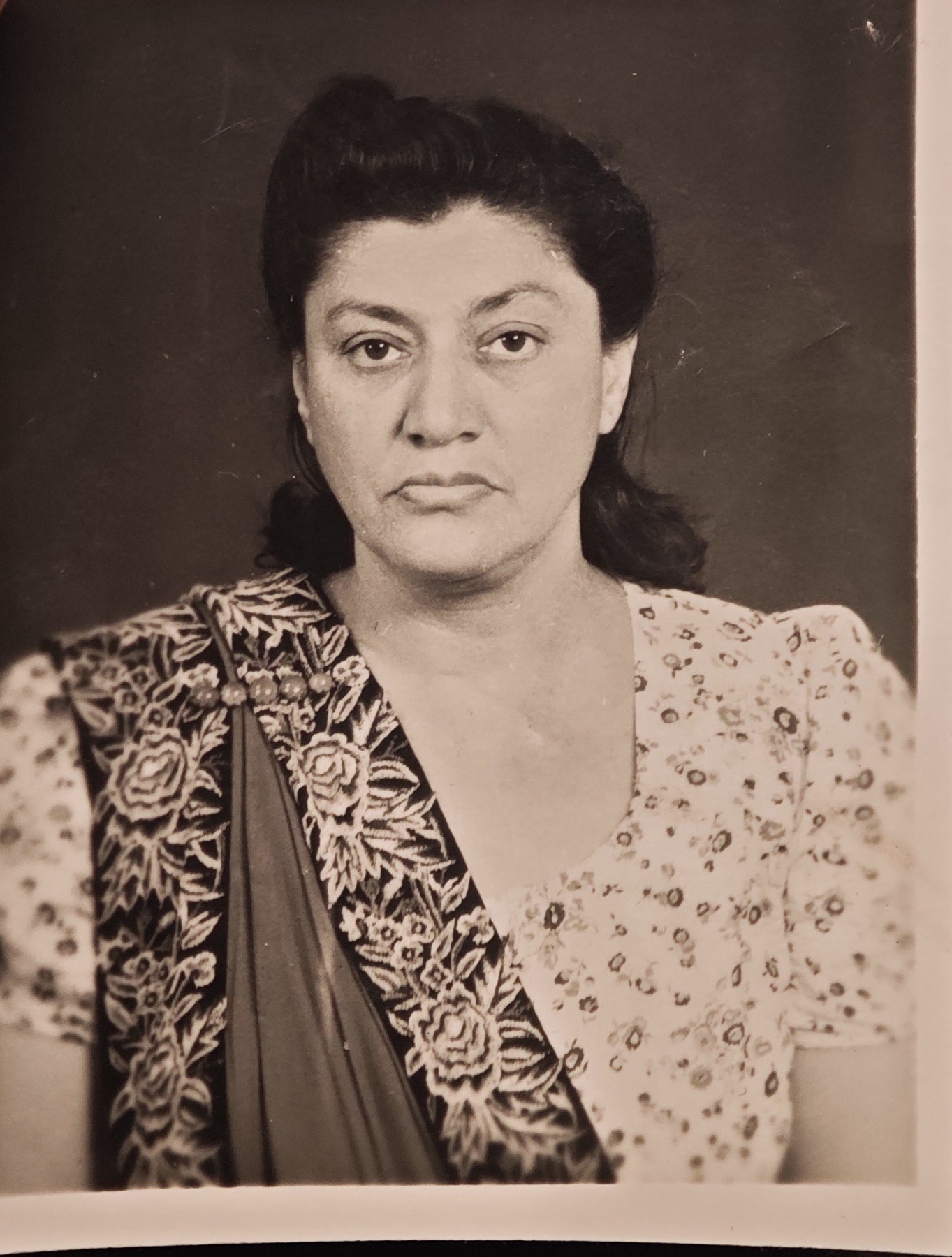
Villoo, Sam’s mother, in a portrait captioned 1957.Family collection
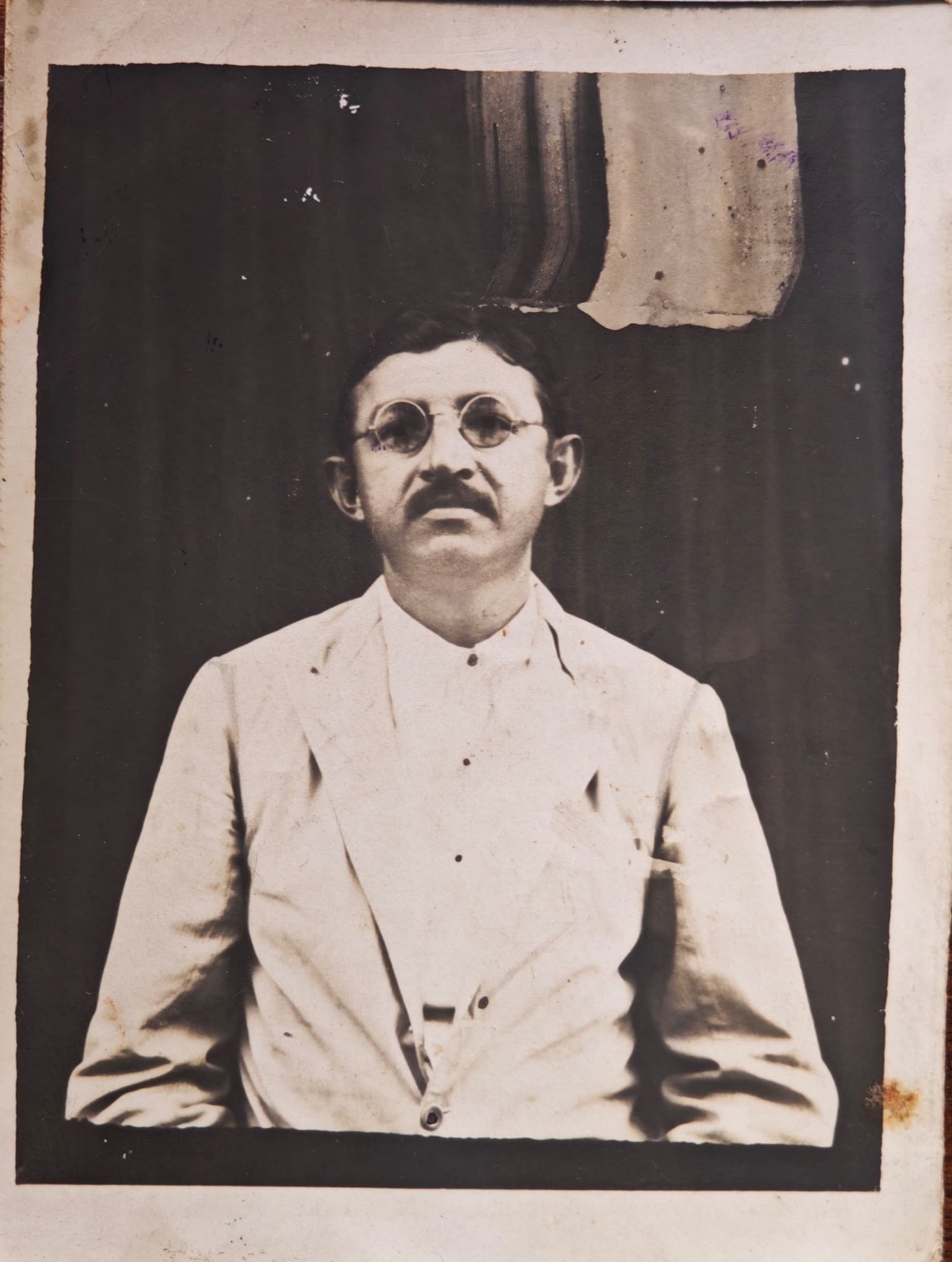
Portrait of Nariman Ardeshir Dubash in round glasses and a pale jacket.
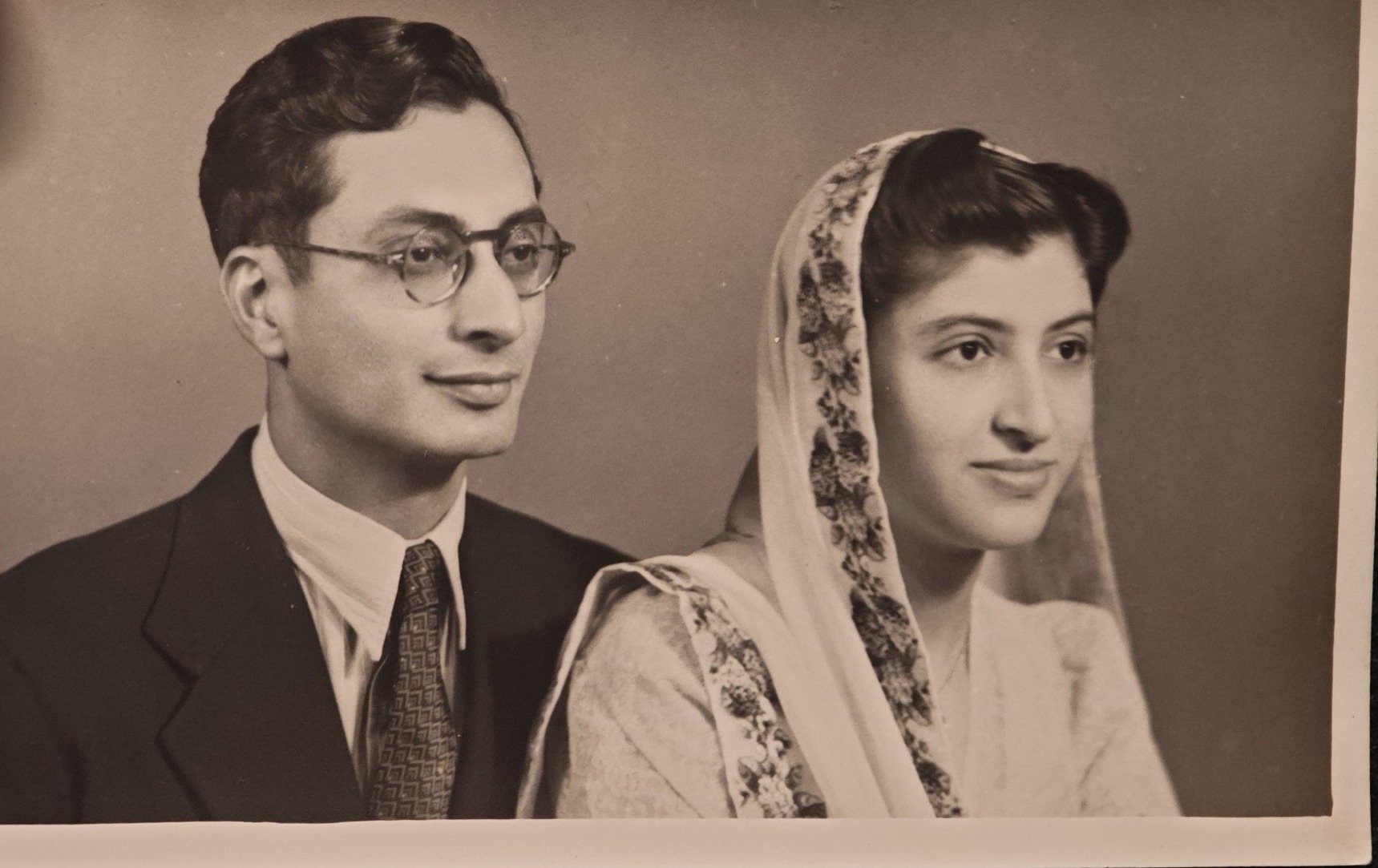
Nariman, Sam’s father. He and Sam looked so alike that some of their photos are easy to mix up.Family collection

The four children

Dina was the eldest, born on 10 October 1924. Sam came next, on 6 August 1926, then Gulmoher on 17 June 1930, and Mehli was the youngest (Ader’s sure of that, though none of us knows his birth date). Dina married Meherwanji Minwalla. Gulmoher is almost certainly the Gulmohar Nariman Dubash on the Mama Parsi Girls’ School’s list of 1946 leavers, and she married Behram Gandi and eventually settled in California. Mehli stayed in Karachi with his wife Arnawaz, who everyone knows as Annu.

Freny Sethna tells me that Villoo’s sister Alla, who everyone called Aloo, took care of Sam a lot when he was young, and later of Dina’s four children too. Aloo’s own arranged marriage, to a man in Quetta, didn’t last, and she came home to Karachi and never remarried. She died in 1980, according to Shireen’s family tree. I’d love to know more about her, to be honest, and about what Sam was like as a boy.

All four of them are in the family tree, with the people they married and their children.

The voyage

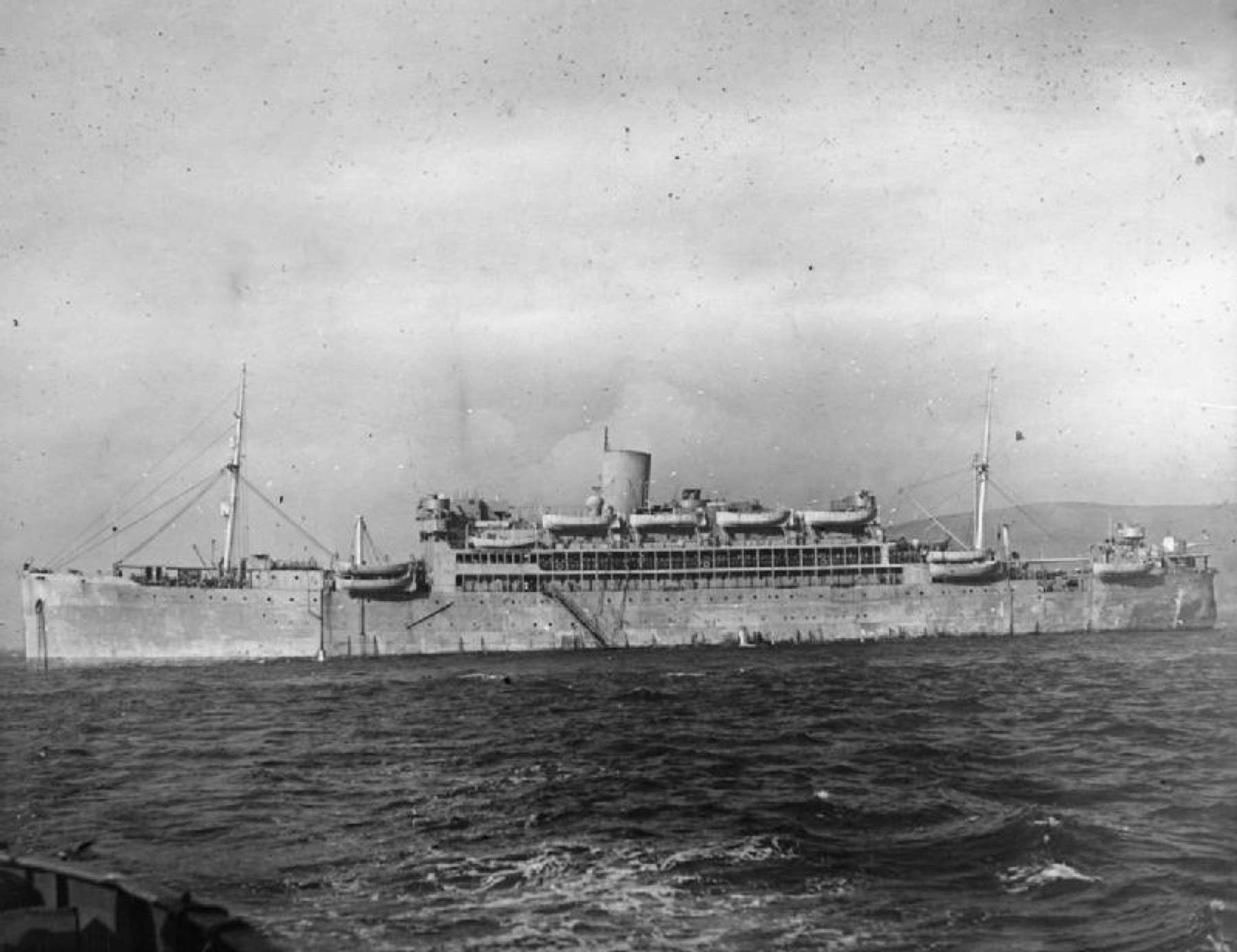
In the spring of 1955 Sam sailed from Bombay, calling at Karachi and Aden, to Liverpool on the Anchor Line’s SS Circassia, arriving on 13 April. The passenger list has him as a Pakistani citizen, single, working as an Assistant Cashier. He was 28. I don’t know yet why he went, or whether he meant to stay.

The Circassia at sea, photographed during the Second World War.
The same ship during the Second World War, when she served as HMS Circassia. It isn’t a photograph of Sam’s crossing, but it’s the ship he crossed on.Imperial War Museums, FL 8122, Crown copyright expired

Paddington

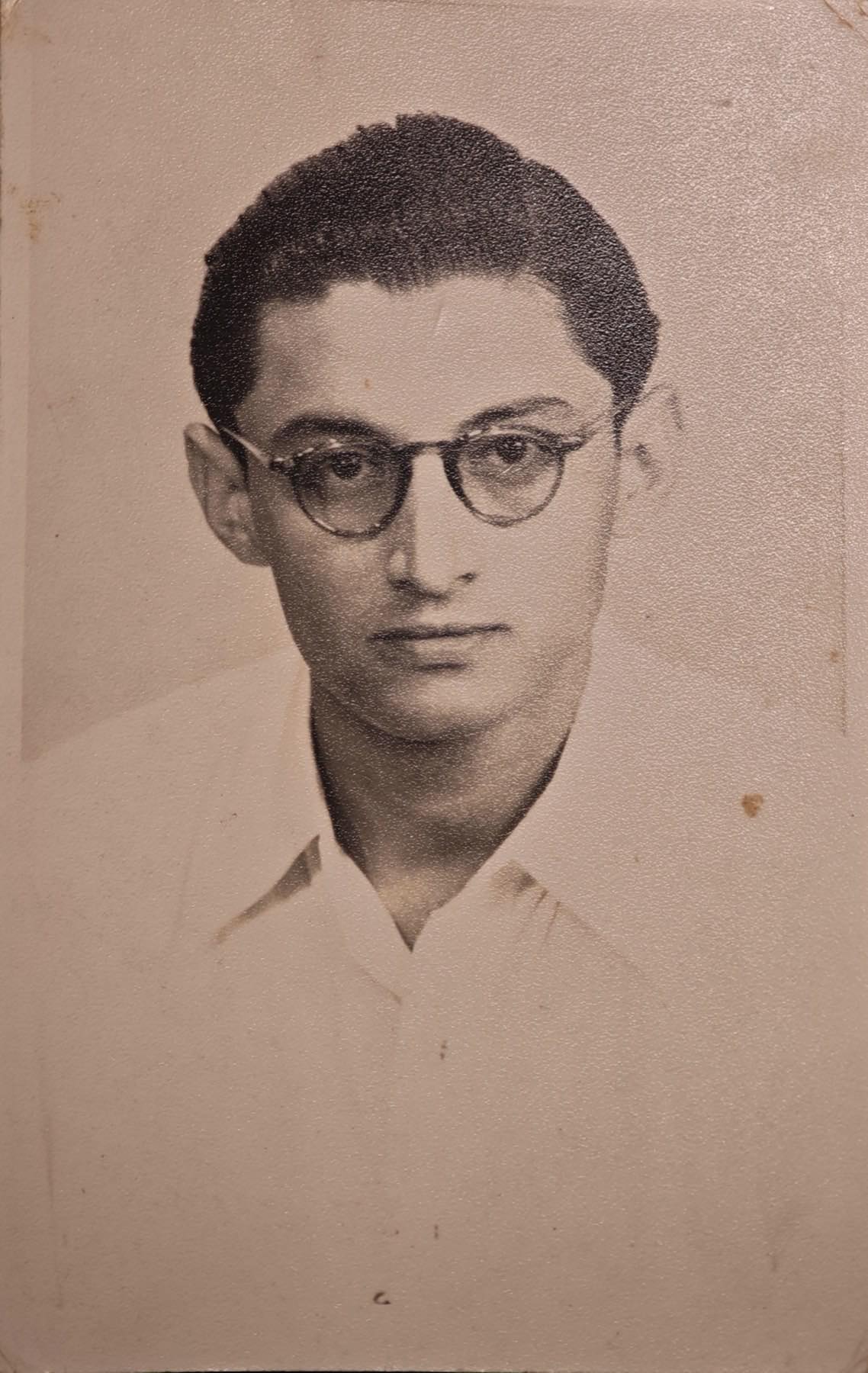
The following year he married my grandmother, Jean Margaret Taft, in the Paddington registration district, and for a while they lived at 21 Inverness Terrace in W2. On the back of the postcard portrait below he wrote Jean a love letter. He calls her “My Dearest of Dear Jinoo” and calls the photograph “a postcard of a Baboon whom you love so very much”, and he signs it just “Dubash”.

I’ve ordered their marriage certificate. It should show the full name Sam gave when he married, along with his father’s name and job, which might help with a couple of the questions further down.

Postcard portrait of Sam Dubash in a white shirt and round wire glasses, about 1955.
Sam, about 1955. The love letter is on the back.Family collection
A white stucco Victorian terrace on Inverness Terrace, Bayswater, with pillared porches, iron railings and first floor balconies.
21 Inverness Terrace today, where Sam and Jean lived for a while in 1957. This is Google Street View from July 2024. Look around it on Google MapsImage © Google

Karachi, and two sons

Jean went out to Karachi with Sam. Ader and Jamshed remember that she didn’t really take to it (they say she found it noisy and overwhelming) and that she came home sooner than planned. My dad, Neville, was born in Paignton in 1957, and the family called him Aalo. His brother Nariman, who everyone knows as Dougal, followed in 1959.

The 1960s

This is the part I know least about, and I’ve tried not to fill the gaps with guesses. In the early 1960s Sam became unwell. Dougal remembers him being sectioned and admitted first to Digby Hospital in Exeter, and the diagnosis at the time being schizophrenia, which he points out “was used as a catch-all for various mental health issues”.

Sam and Jean divorced in 1964. Dougal remembered it as 1962, but Sam’s will says 1964.

The years apart

After that the family in England mostly lost sight of him. Jean brought the boys up in Devon, and she kept the name Dubash for the rest of her life.

A few people did see him. Jamshed visited him in Bristol for a day in 1974, he thinks, and met a good friend of his there called Gerty. Sam told him that he used to watch Neville and Dougal getting on the school bus, from a distance. Jamshed says he was heartbroken hearing it, and honestly so am I. A couple of years later, in about 1976, Jamshed and his cousin Rosheni spent three days with Sam in London and they all went to Canvey Island together.

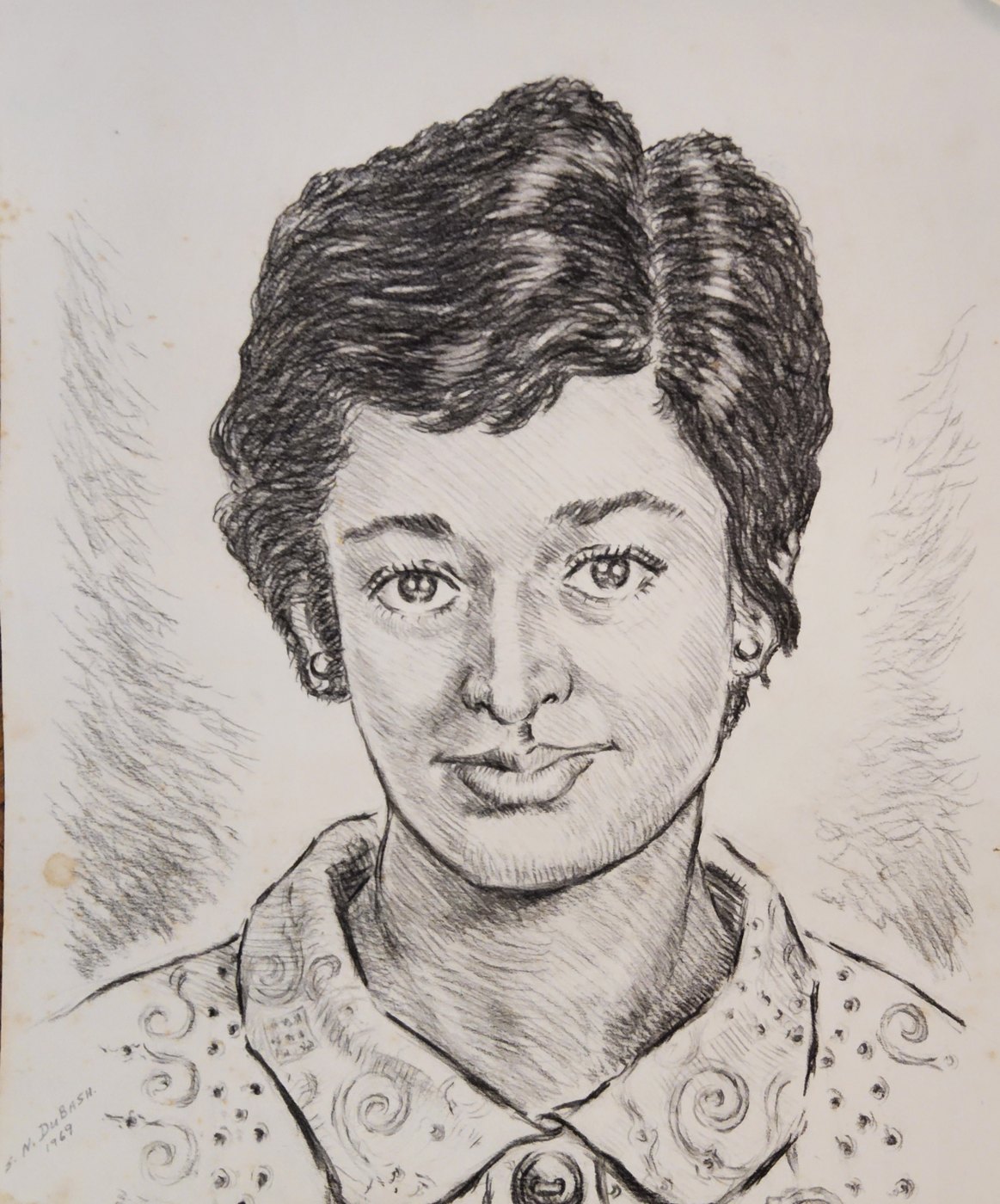
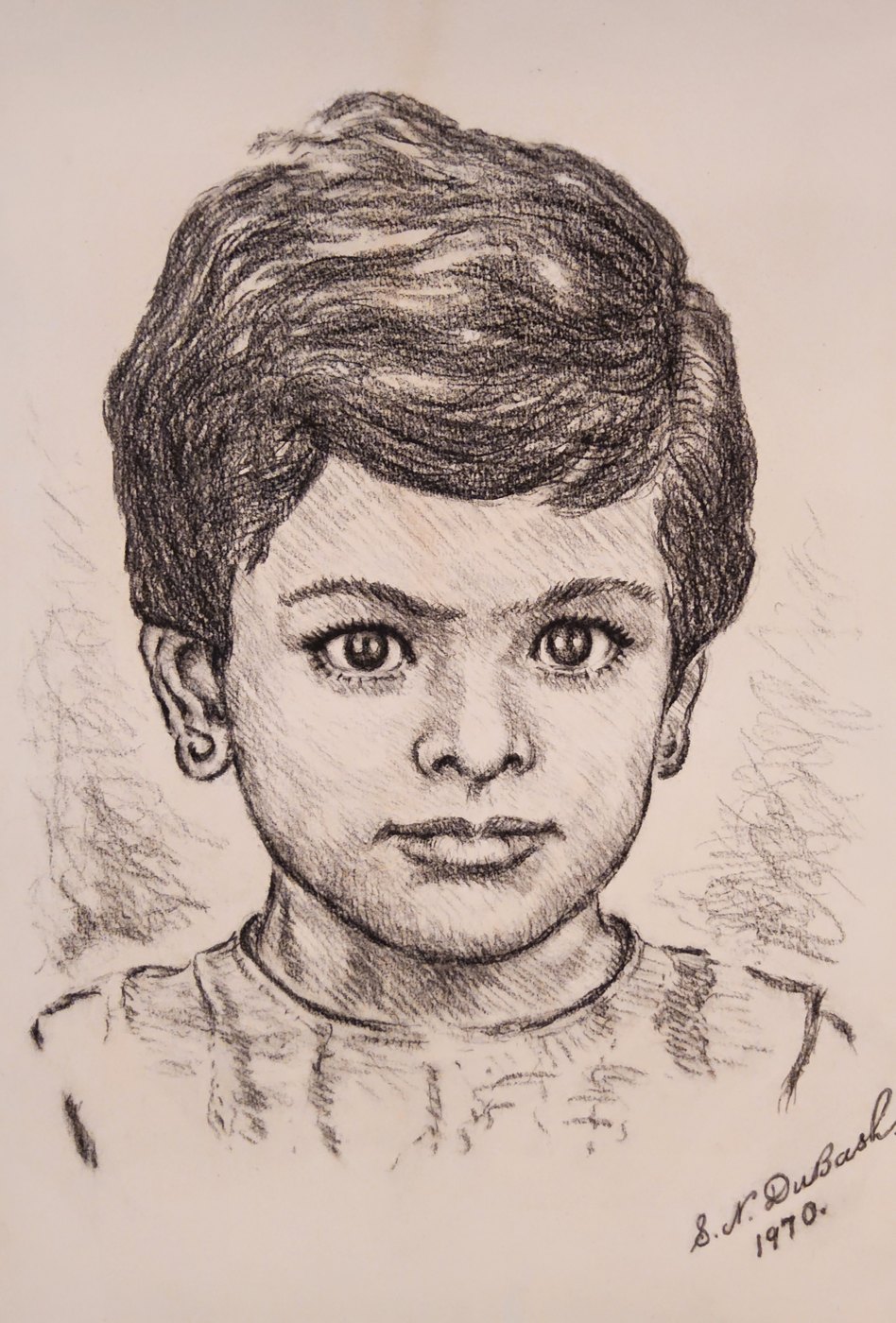
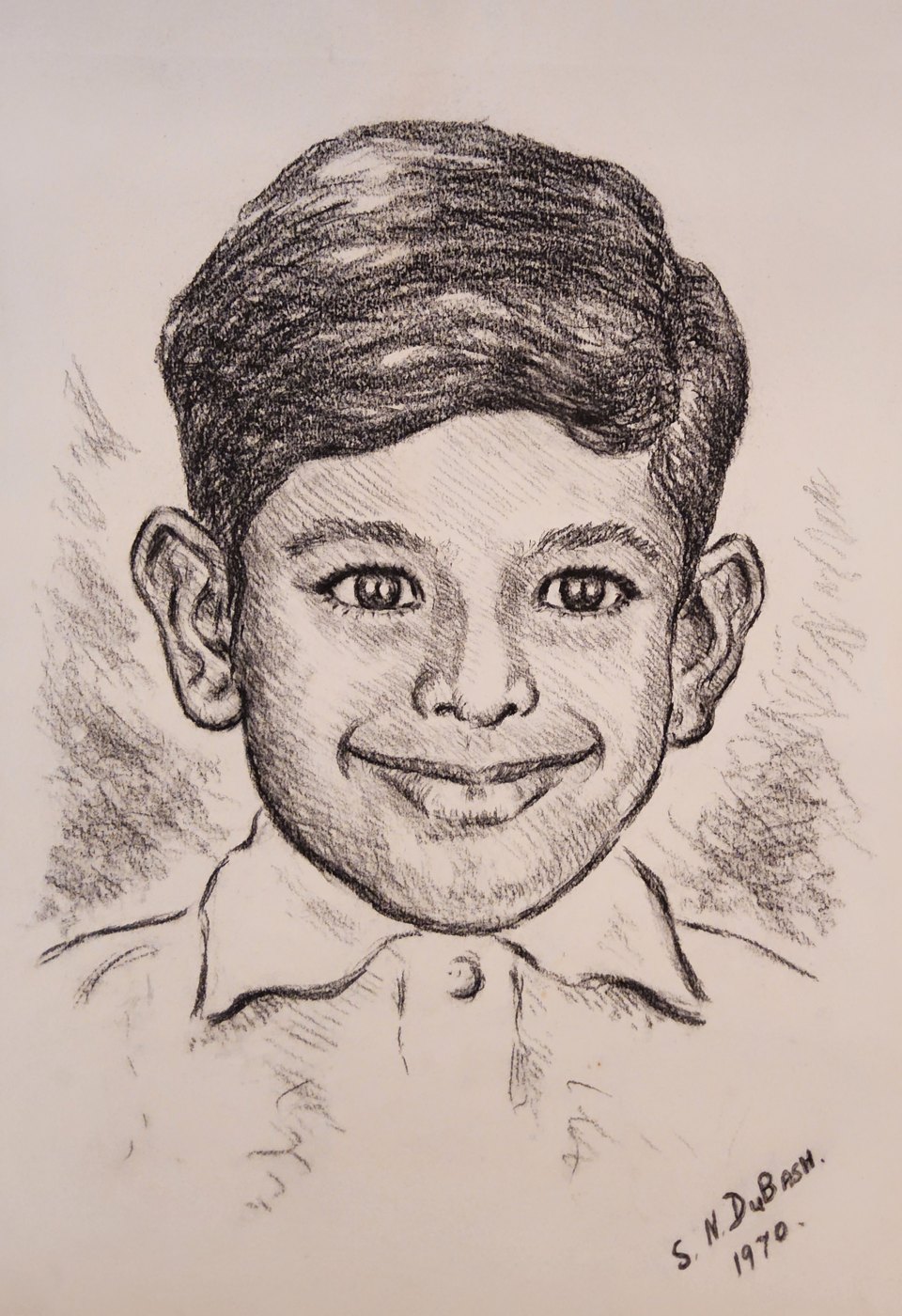
Freny Sethna, his cousin, saw him too. In 1969 she, her husband and their two children came through England on their way to Canada, and Sam turned up to see them without any warning, got his landlady to give them her spare room, and took them round the art galleries. Afterwards he drew Freny and both children and posted the drawings out to them in Canada. Freny remembers him drawing portraits long before that, and helping her and her sister Katy with the albums of famous people they put together for school. So even while he’d lost touch with us, he hadn’t lost touch with everyone, and he was obviously still drawing.

A pencil portrait of Freny as a young woman with short wavy hair and a patterned collar. A pencil portrait of a small child with a thick fringe, looking straight out. A pencil portrait of a grinning young boy in a collared shirt.
Freny, drawn by Sam in 1969, and her two children, drawn in 1970. He signed all three S. N. Dubash.Freny Sethna’s collection

Clifton

By the end of 1987 Sam was living in a ground floor flat at 4 Hanbury Road in Clifton, with a collection of furniture, drawings, paintings, sculpture and ceramics. On 18 November 1987 he made a will with Watson Sennett, a firm of solicitors on John Street in Bristol. It’s the most personal thing of his I’ve got.

“ALL my life I have been a keen collector of beautiful things”

The will, clause 7, 18 November 1987

He asked for the rent on the flat to keep being paid after he died, so his things wouldn’t be cleared out in a hurry, and for anything nobody wanted to be sold at Sotheby’s or Christie’s. He wrote “I am a Zorastrian” (his spelling), asked to be cremated rather than laid out in a chapel or a church, and wanted his ashes scattered on the sea. He even asked for doctors to make sure he was actually dead first.

Ader remembers him as a follower of Meher Baba, the Indian spiritual teacher, and I’ll come back to that.

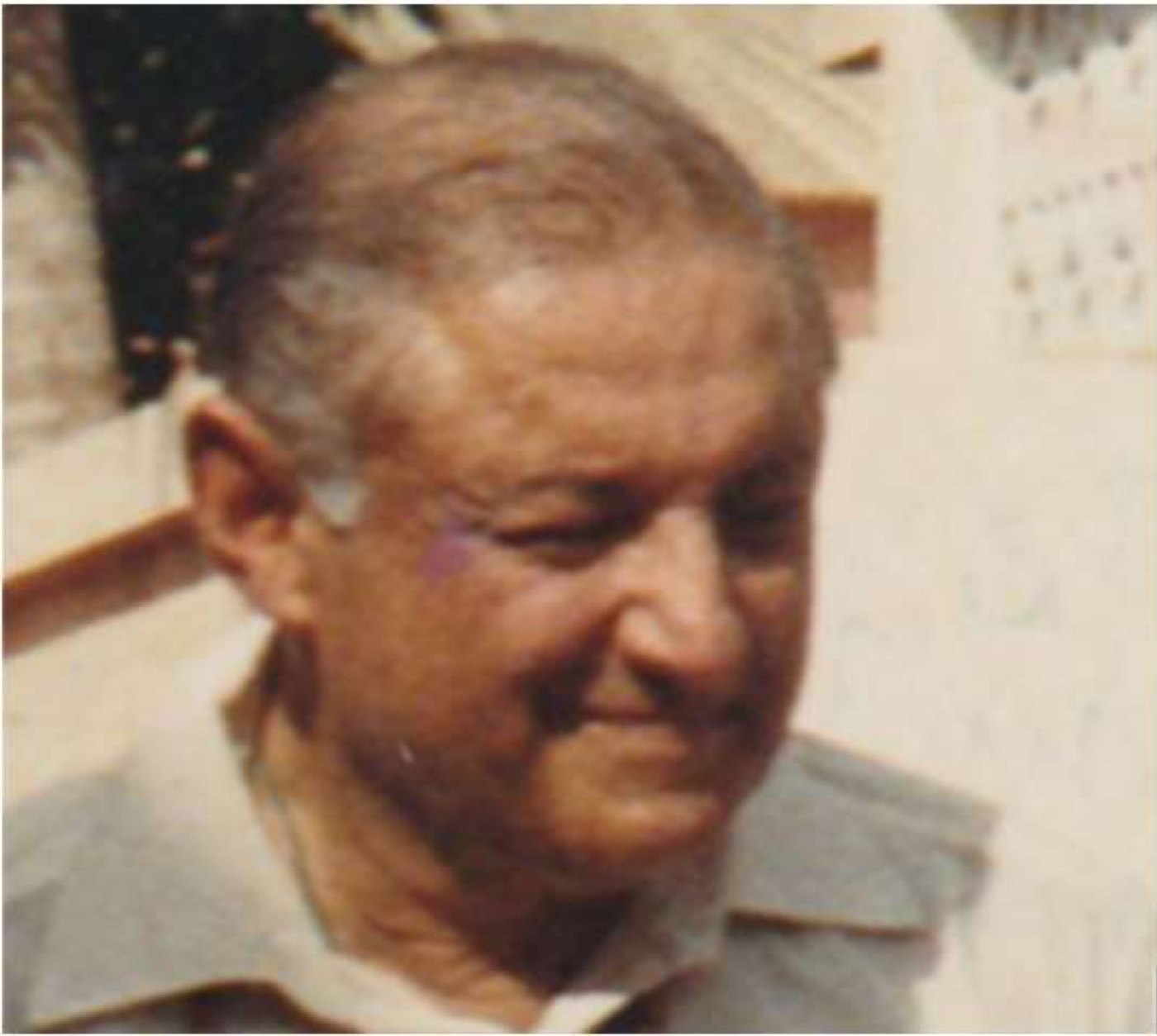
A tall Victorian terraced house on Hanbury Road, Clifton, with stone bay windows and steps up to a green front door, seen from across the street. Sam in later life: an older man with thinning grey hair swept back, smiling and looking down.
4 Hanbury Road today, or as near as Google Street View can show it (July 2025). Sam’s flat was on the ground floor. Look around it on Google Maps
In the circle, Sam in later life. It’s the only photo I have of him after the 1950s, and I don’t know when or where it was taken.Street View image © Google. Photo of Sam shared by Shireen Shish, from her Daroga family tree

The ring

“the plain gold ring which I wear around my neck”

The will, clause 4, 18 November 1987

He left it to his uncle, Khurshed Meherwanjee Daroga, at 29 Parsi Colony, and asked for it to be sent out as soon as possible after his death, with the customs paid from his estate, and “treated as an heirloom by my family and shall not be altered or disposed of in any way”.

I don’t know if it ever got there. Khurshed later moved to America and died in Massachusetts in 2003, so if it did arrive, it might still be with his children. I’ve asked.

3 January 1988

Sam died on 3 January 1988, and not in England. His death was never registered in England or Wales: only fourteen Dubash deaths were registered there at all between 1916 and 2007, and none of them is his. Freny remembers that he was on holiday in India and had her uncle Khurshed’s name and address in his wallet, which is how the family in Karachi found out.

The rest comes through Ader, from his cousin Faredoon Minwalla, Dina’s son. As Faredoon tells it, Sam was travelling with a British woman described to the family as a faith healer. He died in India, possibly of a heart attack, and was cremated there. She wrote to Khurshed to let them know and sent a photograph of three people: Sam, herself, and a tall man said to be her son. Faredoon kept it in a folder he’d put together, but he left that behind in Pakistan when he emigrated, so it’s probably lost. I’m told he tried to find out more at the time through the British Consulate in India, and I’ve since learned that my dad worked on it with him. Ader has been careful to say he can’t vouch for all of it, and it’s a second-hand account from nearly forty years ago, but a lot of it matches the will, including the small funeral insurance policy in it, which Faredoon knew about without ever having seen the will.

The will names one executrix and main beneficiary, Gabriel Peters, of Portishead. It calls her “she”, so Gabriel was a woman. I think she was probably the woman he went to India with, but nothing I’ve found proves it, and I haven’t found any other trace of her in the records of England and Wales. If she had died before Sam, the rest of his estate was to go to his sister Dina. Faredoon’s understanding, as Ader passed it on, is that Sam meant the money to go to Dina, though Ader is the first to say he can’t know the truth of it. What I can say is that the will was signed in Bristol in front of two of the solicitors’ staff six weeks before he died, and it’s the one that was proved, so whatever happened on the trip, it wasn’t changed in India. The estate came to under £70,000 before debts and under £10,000 after.

Probate was granted in Bristol on 25 March 1988, to “Minocher Nariman Dubash otherwise Sam Nariman Dubash”. When I asked, neither Ader nor Jamshed had ever heard him called Minocher. He’s Sam on his passenger list, on his marriage record and on the backs of his photographs, and as far as I can find, Minocher only appears in the will and the two documents made from it. My own reading is that he used it so that Jean and his sons couldn’t easily find a record of his death, and it would fit with what he asked for in clause 8.

“I do not wish my former wife and children who now reside in Devon to be informed of my death because there has been no contact between myself my wife and my children for the past thirty years”

The will, clause 8, 18 November 1987

I can’t prove that’s what he was thinking, and it’s possible Minocher was a formal name on paper that nobody ever used. The marriage certificate should tell me one way or the other.

And why India? One possibility is Meher Baba. His tomb at Meherabad, near Ahmednagar, is where his followers go on pilgrimage, and January is the season for it. The Meher Baba Association in the UK were very kind when I wrote to them, and their archivist wondered whether Sam might be related to Adi and Rhoda Dubash, who lived at Meherabad for many years and were close to Meher Baba. I don’t know yet, and for now it’s only a guess.

What might run in the family

This part is hypothetical, and I want to say that up front. None of it was ever diagnosed, and most of the people in it can’t be asked. But the more of the family I’ve found, the more I’ve noticed the same couple of things turning up, and to be honest they’re a big part of why I started looking in the first place.

The first is making things. Sam drew portraits and collected paintings and drawings all his life. His sister Gulmoher was an artist too, and Ader remembers her moving in Karachi’s art circles. Freny’s mother Khorshed painted saris in oils and sold them, and Freny’s sister Katy still paints. My grandmother Jean was at art college during the war. My dad was a professional landscape photographer and a graphic designer, and he drew portraits as well, and he definitely had the eye for something looking right. Ader used to run a photography gallery in Mumbai. I’m a graphic designer and photographer myself, my sister Rachel does some graphic design, and we’re both musical. For me, anyway, it’s always felt less like a hobby than a compulsion.

The second is harder to pin down, a kind of restlessness and appetite for risk. When I met Ader in London in May 2026, he told me his grandfather Nariman, Sam’s father, was a gambler. He remembers him losing money and coming to Ader’s mother, Gulmoher, to ask her for more, with his hands shaking. Ader does a bit of stock trading himself, and he told me that when he catches himself gambling on the markets he sometimes thinks of Nariman, and wonders whether there’s a line between the two of them, straight, dotted or curved.

And then there’s the way our heads work. I’ve almost certainly got ADHD, though I’ve never been formally diagnosed, and Rachel thinks she’s autistic, which I’d agree with. I’m fairly sure my dad had ADHD too, and I suspect a bit of autism as well, going by how he was with people at times. Sam’s diagnosis in the 1960s was schizophrenia, but from the stories I’ve heard, with his moods rising and falling over months at a time, I think something like bipolar disorder might fit him better, though that’s only my reading from a long way off. For me the ADHD comes with a constant need for something new, which is great for creative work and for saying yes to things like meeting Ader, and not so great for anything that’s important but not urgent yet.

ADHD, autism and bipolar disorder all tend to run in families, and they overlap quite a lot, so I don’t think it’s far-fetched that some of this goes back a few generations. I can’t prove any of it though, and plenty of families have artists and gamblers in them by chance. We seem to be quite a family of oversharers and thinkers, so I don’t think writing it down is a bad thing. If anyone in the family recognises any of this, in themselves or in someone they remember, I’d really love to hear about it.
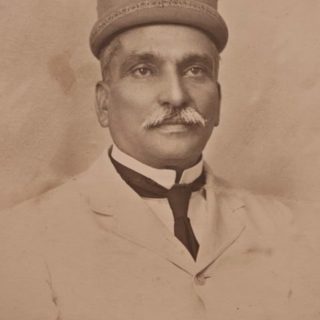
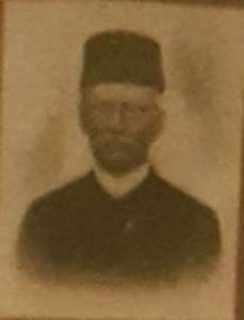
What I still don’t know

  • Where in India Sam died, and how. The probate registry would probably have needed to see a death certificate, so the solicitors’ file might have one, if it survives.
  • Who Gabriel Peters was.
  • Whether the gold ring reached Karachi, and whether it still exists.
  • Who Ardeshir married. Nariman’s mother is a complete blank.
  • Whether Jivanji really was Ardeshir’s father. Pestonji A. Dubash might answer it, and so might three contracts between the Hall Line and the firm from 1891 and 1893, which are held in Liverpool and which I haven’t seen yet.
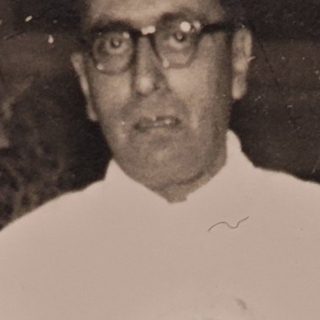
  • What became of Jal Ardeshir Dubash. There’s a J. A. Dubash at Loxford Hall, Preedy Street, in the 1937 directory, and a Jal Dubash who started working for Brigstocke Eduljee in 1917 and died in 1973, but I can’t say yet that either of them is ours.
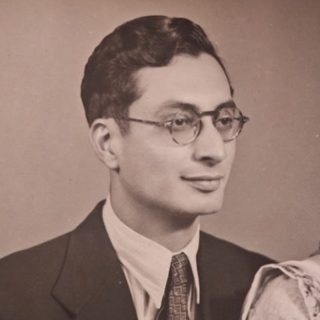
  • Whether Adi Dubash of Meherabad was family, and if he was, whether his father was Jal.
  • Why Minocher.

Years ago my dad looked into Sam’s death with Faredoon. Dougal says Dad had some memories of Sam but never really spoke about him, and I didn’t know any of this when I started, so I’ve ended up doing the same search again, a generation later.

Corrections

If you’ve read this far and something’s wrong, or you know something I don’t, please tell me. That goes for dates, spellings and who married who, and for the stories too. A lot of the people reading this knew these people and I didn’t, so I’d much rather be corrected than keep a mistake in here. If you’re in the family WhatsApp group that’s probably the easiest place, otherwise just message me.

Sources

  • Jehangir Framroze Punthakey, The Karachi Zoroastrian Calendar, pages photographed from Jamshed Gandi’s copy
  • Somerset Playne and Arnold Wright, The Bombay Presidency, the United Provinces, the Punjab, etc., 1920, page 781
  • An advertisement in the Port of Karachi Magazine, 1962
  • The Karachi residents directory of 1932 and the Karachi Residential and Mercantile Directory of 1937-38
  • Lloyd’s Register of Shipping, 1920-21
  • UK incoming passenger lists, 1955
  • General Register Office indexes of marriages and deaths, and the England and Wales death index, 1916 to 2007
  • Sam’s will of 18 November 1987 and the grant of probate of 25 March 1988
  • Shireen Shish’s Daroga family tree
  • A 2015 post on the Bamboat family by a Bamboatwalla descendant
  • The Mama Parsi Girls’ School alumnae list
  • The family’s own photographs and papers, most of them from Dougal
  • What the family have told me: Ader Gandi, Jamshed Gandi, Mohsin Khan, Freny Sethna, Dougal Dubash, and Faredoon Minwalla through Ader
  • Menin Rodrigues, on the Sequeira studio, and the Meher Baba Association UK